

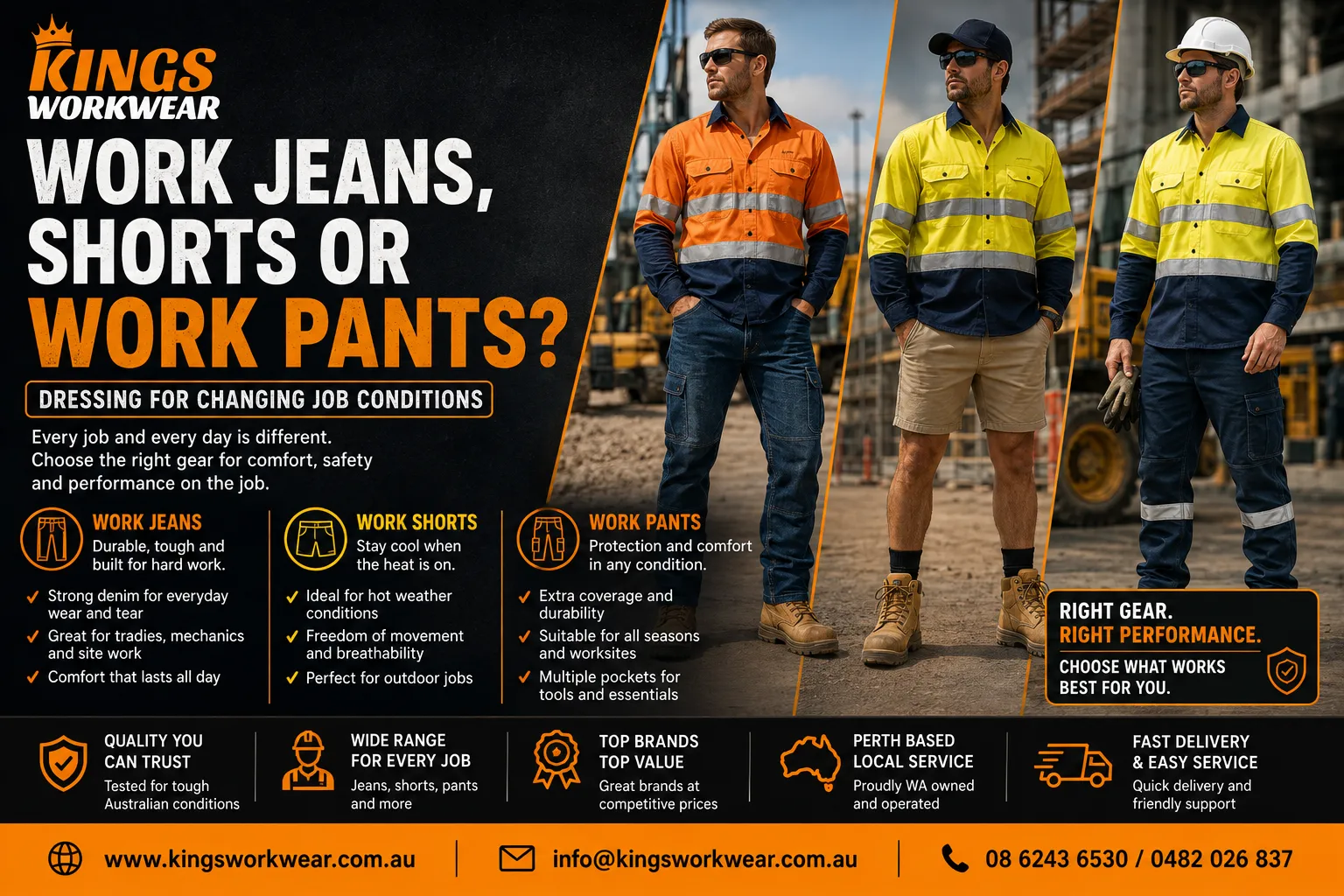
Work clothing has to adapt to tasks, weather and workplace expectations. A heavy pair of trousers might make sense on one job, while a lighter option can be more comfortable for another.
For many workers, work jeans remain a familiar choice because they combine a traditional appearance with designs intended for practical work use.
However, jeans are only one option.
When Work Jeans Make Sense
Jeans can suit roles where durability and full-leg coverage are useful but specialised trousers are not required.
People often prefer them because the style transitions easily between site-related duties and less formal customer-facing situations.
Check More Than the Denim Weight
Consider:
-
Fit through the waist and thighs
-
Ease of bending
-
Pocket layout
-
Leg shape
-
Compatibility with boots
-
Reinforcement where provided
-
Workplace uniform requirements
Work jeans should support movement instead of becoming restrictive during crouching or climbing.
Work Pants Can Offer More Job-Specific Features
Purpose-designed work pants may include cargo pockets, stretch zones, reinforced sections or other practical features depending on the model.
They can suit workers who carry tools or repeatedly move between standing and kneeling tasks.
Compare Features With Actual Needs
More pockets are not automatically better.
If loaded pockets interfere with movement, the added storage becomes a disadvantage. Choose features based on the items you genuinely carry.
When Shorts Are Practical
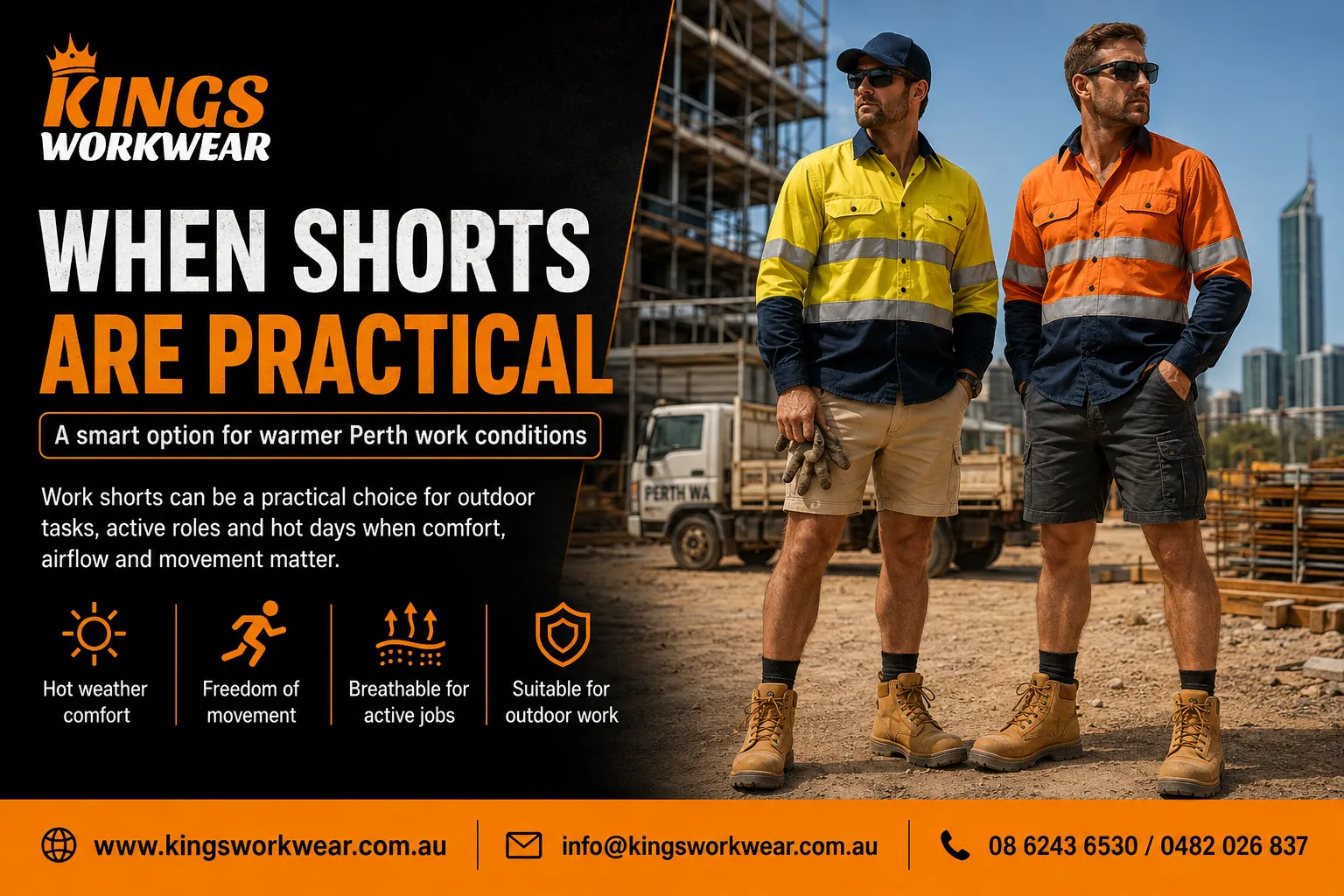
During warmer periods, work shorts can provide a lighter alternative where the workplace permits them.
They may suit active roles in environments where full-length leg coverage is not required.
Check Site Rules Before Switching
Some workplaces require long pants due to specific hazards, sun exposure policies, uniform requirements or other considerations.
Never assume hot weather automatically makes shorts appropriate.
Before wearing work shorts, check your employer’s requirements and the risks associated with the task.
Socks Deserve More Attention
Socks are easy to treat as an afterthought, yet they sit directly between the foot and work footwear for the entire day.
Appropriate work socks can influence how boots fit and feel.
Match Socks to Footwear and Weather
Consider:
-
Thickness
-
Boot fit
-
Length
-
Fabric feel
-
Seasonal conditions
-
How frequently they will be washed
Work socks that are too bulky can make correctly sized boots feel tight, while poorly fitting socks may bunch during movement.
Build Options for Changing Weather
A worker may need different lower-body clothing across the year.
Instead of trying to make one garment work in every condition, build a small rotation.
For example:
-
Work jeans for cooler general-purpose days
-
Lightweight pants for active duties
-
Work shorts for approved warm-weather environments
-
Alternative pants for wet or dirty tasks
-
Suitable socks for different footwear combinations
This creates more flexibility without requiring an excessive wardrobe.
Think About Movement Before Appearance
Try the movements you actually perform.
If possible, bend, squat, step up and sit while assessing pants or shorts. A garment that looks ideal while standing can feel very different during work.
Driving Is Often Overlooked
Tradespeople and mobile workers may spend substantial time seated in vehicles.
A waistband, pocket or tool loop that feels fine while standing may become uncomfortable during long drives.
Include seated comfort when evaluating work jeans.
Coordinate With Boots
The hem of trousers should work practically with your normal footwear.
Shorts remove this issue but expose more of the leg, which can make them inappropriate for some work.
Work socks should also be long enough and comfortable with the height of your usual boots.
Keep Workplace Requirements in Control
Personal preference matters only after mandatory requirements have been satisfied.
Consider:
-
Uniform policies
-
Required protective clothing
-
Visibility requirements
-
Environmental hazards
-
Site-specific restrictions
-
Weather
If work shorts are not permitted, choose an appropriate lighter full-length alternative rather than ignoring the requirement.
Why Choose Us
Kings Workwear separates jeans, men’s work shorts and footwear-accessory socks into dedicated categories, allowing workers to compare different wardrobe components according to season and task.
This makes it easier to build several combinations rather than relying on one trouser style throughout the year.
About Us
Kings Workwear carries work clothing, footwear and accessories for Australian workers, including dedicated ranges for jeans, shorts and socks.
Workers considering work jeans or seasonal alternatives can compare individual products according to workplace requirements and preferred fit.
Conclusion
Jeans, pants and shorts each have a place in a working wardrobe, but the job should determine which option makes sense on a particular day.
Think about protection, workplace rules, temperature, movement and footwear. Add suitable socks and you have a lower-body clothing system that can adapt across different tasks and seasons rather than forcing a single garment to do everything.